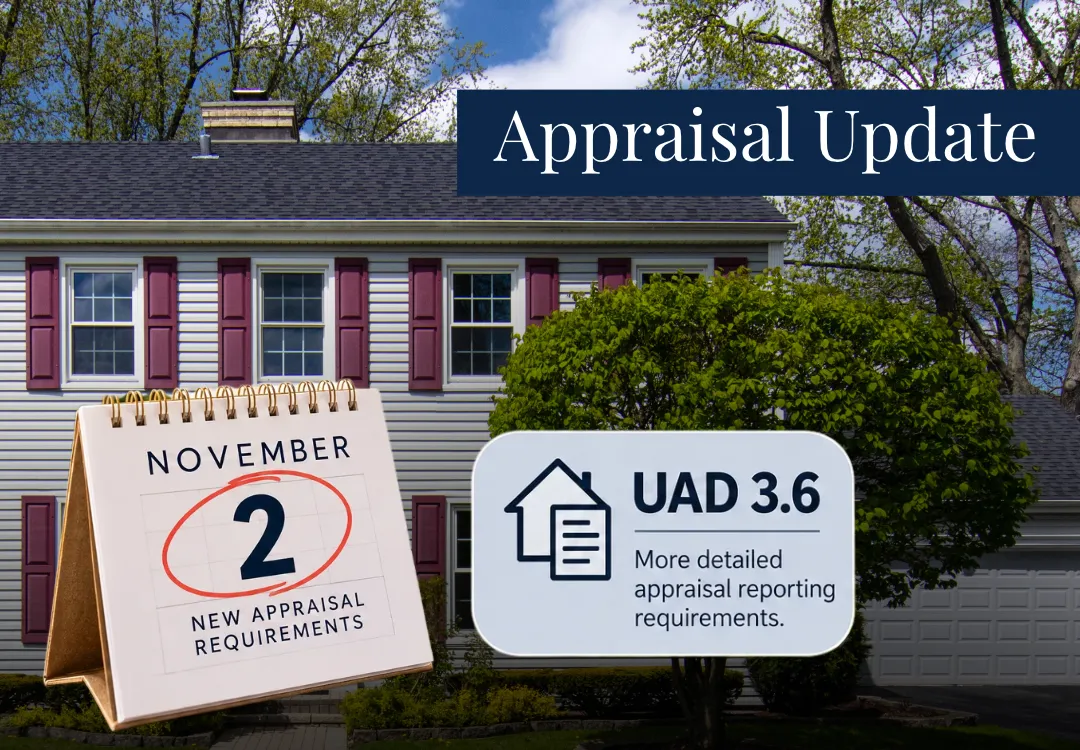
UAD 3.6 Appraisal Update: What Maryland Homebuyers and Sellers Need to Know
Planning to buy or sell a home in Maryland? Here's an important appraisal update worth understanding before your next move.
Whether you're preparing to list your home or getting ready to purchase one, the appraisal is an important part of many real estate transactions.
And there's a change to the appraisal reporting process that both buyers and sellers should know about.
It's called UAD 3.6, an updated appraisal reporting format being introduced for mortgages involving Fannie Mae and Freddie Mac.
While this update doesn't fundamentally change how a home's value is determined, it does introduce more detailed property reporting requirements. As lenders and appraisers transition to the new format, some transactions may require additional time.
Here's what that means for Maryland homeowners, buyers, and sellers.
What Is UAD 3.6?
UAD stands for Uniform Appraisal Dataset.
UAD 3.6 is an updated standard for collecting and reporting information in residential real estate appraisals.
When a buyer purchases a home using mortgage financing, the lender generally orders an appraisal to obtain an independent opinion of the property's market value.
An appraiser evaluates factors such as the home's location, condition, size, features, and comparable property sales.
The updated UAD 3.6 reporting format provides a more structured and detailed way to document that information.
The goal is to improve the consistency, accuracy, and quality of property data used throughout the mortgage process.
The important thing to understand is that UAD 3.6 changes the reporting process, not the fundamental principles of property valuation.
What Does UAD 3.6 Mean for Home Sellers?
If you're preparing to sell your home in Anne Arundel County or Prince George's County, having accurate property information available can be especially helpful.
Here are three ways to prepare.
1. Document Your Home Improvements
Have you updated your kitchen, replaced your roof, installed a new HVAC system, or completed other renovations?
Start putting together a detailed list of those improvements.
Instead of simply saying your kitchen was renovated, include details such as:
What was replaced or upgraded
When the improvements were completed
Materials or features that were installed
Whether permits were obtained when required
For example, rather than writing "updated kitchen," you might document that new cabinets, quartz countertops, and appliances were installed in 2024.
These details can help the appraiser better understand your property's features and condition.
Keep in mind that improvements don't necessarily increase your home's appraised value dollar for dollar.
2. Gather Supporting Documents
If you have receipts, contractor invoices, permits, warranties, or renovation records, keep them organized.
Having these documents readily available can help clarify property improvements and answer questions that may arise during the appraisal process.
You don't need to make the process complicated. A simple list with dates and supporting records is a great place to start.
3. Prepare for Possible Appraisal Delays
As appraisers and lenders adjust to updated reporting requirements, some appraisals may take longer to complete or review.
This doesn't mean every transaction will experience delays.
It also doesn't automatically mean there's a problem with your home's value.
Sometimes, additional time is simply needed to collect, document, or review the required property information.
My advice for sellers: Prepare your property information early and stay in communication with your REALTOR® throughout the transaction.
What Does UAD 3.6 Mean for Homebuyers?
If you're planning to purchase a home in Maryland, understanding the appraisal process can help you prepare for the steps between an accepted offer and closing day.
1. The Appraiser May Need More Time at the Property
Under the updated reporting format, appraisers may collect more detailed information about a home's characteristics and condition.
Depending on the property, that could mean spending additional time gathering information during the appraisal assignment.
2. The Appraisal Report May Take Longer to Complete
The appraisal involves more than visiting the property.
After collecting information, the appraiser must analyze the property, review comparable sales, and complete the report.
The lender may also need time to review the completed appraisal.
As the industry transitions to UAD 3.6, some transactions may experience longer processing times.
3. Your Closing Timeline Matters
The appraisal is typically one of the steps your lender must complete before your mortgage can close.
If the appraisal takes longer than expected, it could affect other important transaction deadlines.
That's why it's important to work with your REALTOR® and lender when preparing your offer and establishing a realistic closing timeline.
My advice for buyers: Ask questions early, stay in contact with your lender, and make sure you understand the deadlines in your purchase contract.
Does UAD 3.6 Change How Much a Home Is Worth?
This is an important question, especially for buyers and sellers concerned about appraisal values.
UAD 3.6 does not automatically increase or decrease a home's appraised value.
The appraiser still develops an independent opinion of value based on the property, relevant market data, and accepted appraisal methods.
Factors such as location, condition, size, improvements, and comparable sales remain important.
The updated reporting format changes how property information is collected and communicated.
So, if an appraisal takes longer than expected, don't immediately assume there's a valuation issue.
Your REALTOR® and lender can help you understand where things stand in the process.
How Can Buyers and Sellers Avoid Unnecessary Surprises?
Although you can't control every step of the appraisal process, preparation and communication can make a difference.
For sellers:
Prepare a detailed list of property improvements.
Organize renovation receipts and permits.
Make sure your listing information is accurate.
Be prepared to coordinate property access for the appraisal.
For buyers:
Discuss appraisal timelines with your lender.
Understand the financing and appraisal deadlines in your contract.
Respond promptly to lender requests.
Stay in communication with your REALTOR® as closing approaches.
The goal isn't to rush the appraisal. It's to make sure everyone has the information and time needed to complete the process properly.
How I Help Maryland Buyers and Sellers Navigate the Appraisal Process
Real estate transactions involve many moving parts, and the appraisal is just one of them.
When I work with sellers, I help organize accurate property details and relevant improvement information so it's available when needed.
For buyers, I coordinate with lenders, monitor important contract deadlines, and help establish realistic expectations throughout the transaction.
While appraisers independently determine property values and lenders make financing decisions, my role is to help you stay informed and prepared.
Whether you're buying your first home, relocating, downsizing, or preparing to sell, I want you to understand what's happening and what comes next.
Buying or Selling in Anne Arundel County or Prince George's County?
Every real estate transaction is different, and local market knowledge matters.
I help buyers and sellers throughout Maryland communities including Annapolis, Crofton, Severna Park, Odenton, Gambrills, Edgewater, Bowie, and surrounding areas.
From preparing your home for the market to navigating offers, inspections, appraisals, and closing, I'm here to provide personalized guidance throughout the process.
Let's Make Your Next Move a Well-Prepared One!
The UAD 3.6 appraisal update is another reason why planning ahead matters when buying or selling a home.
With accurate information, realistic expectations, and clear communication, you can feel more confident about the process.
Thinking about buying or selling a home in Maryland? Let's talk about your goals and how to prepare for your next move.
Heather Taylor, REALTOR®
REMAX ONE | Anne Arundel County, Maryland
Mobile: 240-461-1001
Office: 410-224-4400
Website: https://mdhomesbyheather.com


